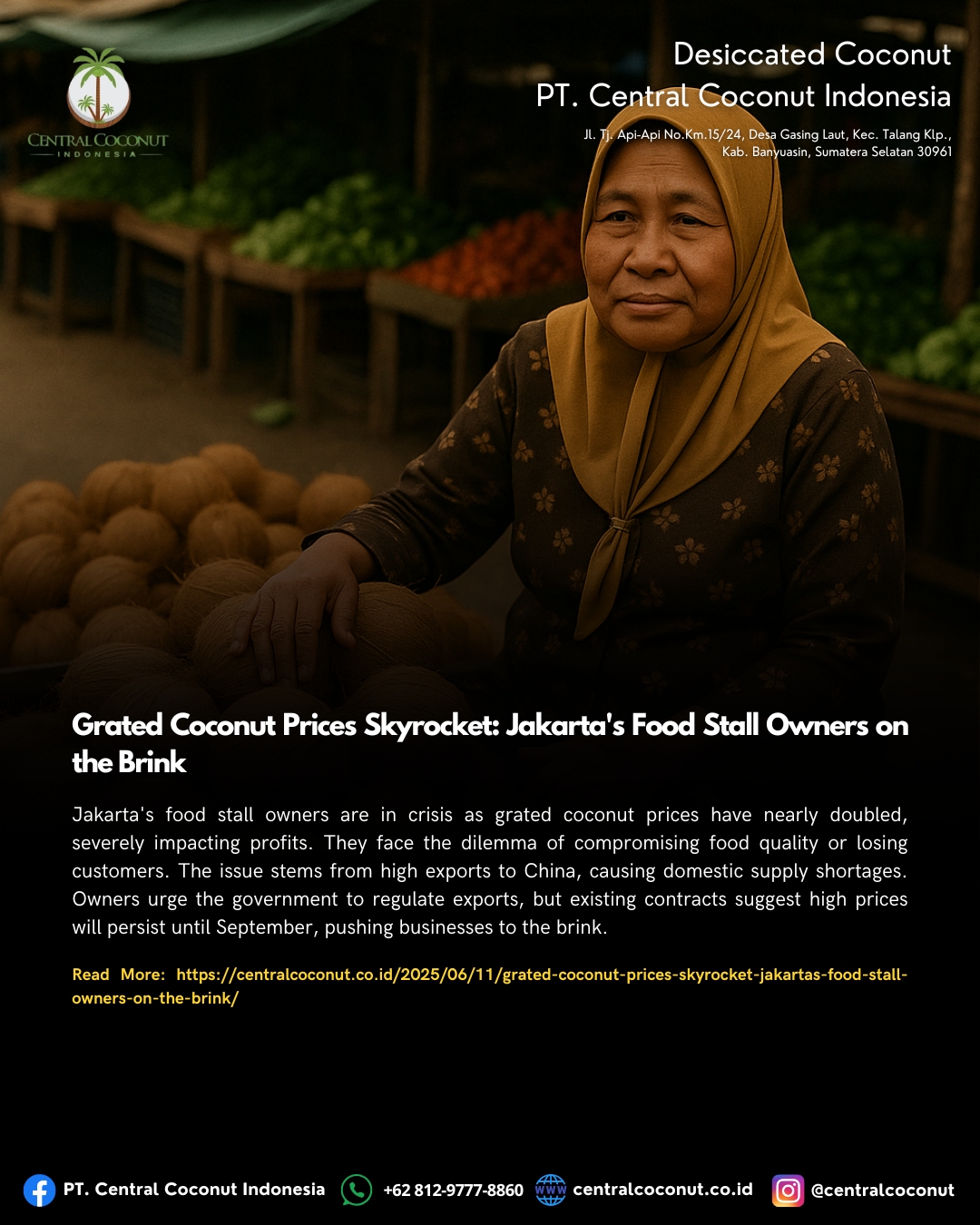
The escalating price of grated coconut in Jakarta has become a daunting nightmare for food stall owners, especially those who rely heavily on coconut milk as a key ingredient in numerous dishes. This price surge is no ordinary increase; it has reportedly nearly doubled compared to the previous year. This situation is directly squeezing profit margins and threatening the very survival of small to medium-sized culinary businesses.
A major dilemma now shadows these entrepreneurs. On one hand, they feel compelled not to reduce the amount of coconut used in their signature dishes, such as gulai, rendang, or soto, fearing that the authentic taste will be severely compromised, leading to customer disappointment. On the other hand, a significant price increase for their products is also not a viable option. This is because they worry it could make their food unaffordable for the majority of consumers, ultimately leading to a decline in customer numbers and even worse revenue. It’s a vicious cycle that leaves food stall owners feeling helpless.
This drastic price hike, according to various sources, is largely driven by the high volume of coconut exports from Indonesia. China is reportedly one of the primary destinations for these exports. Massive demand from overseas has created a supply shortage in the domestic market, forcing local coconut traders to compete fiercely with exporters who offer higher prices. Consequently, the price of coconuts is already soaring even before reaching the hands of retail vendors or food stall owners. This competitive situation further exacerbates the price pressure at the final consumer level.
Given these circumstances, food stall owners have collectively appealed to the government. They are urging for intervention and stricter regulations concerning coconut exports. Their hope is that by implementing certain restrictions or controls on exports, the domestic coconut supply can stabilize again, and prices can be pushed back to a more reasonable level. This represents their last resort to prevent a potential mass bankruptcy that could occur if the upward price trend continues unchecked.
Despite recent reports of a slight price decrease for grated coconut in Kemiri Muka Market, Depok, West Java, on Tuesday, May 20, 2025, optimism for a long-term price drop remains very low. Traders and food stall owners remain pessimistic. Information circulating among them suggests that export contracts for coconuts to several other countries have already been established and will continue at least until September. This implies that domestic supply is likely to remain limited and prices will stay high for the next few months, forcing entrepreneurs to continue struggling amidst rapidly inflating production costs. This situation clearly places culinary business owners on the brink of crisis.
by:
Briandy Effendi
Sales Executive
WhatsApp: +62 812-9777-8860 | E-Mail: sales@centralcoconut.co.id
Jl. Tj. Api-Api No.Km.15/24, Desa Gasing Laut, Kec. Talang Klp.,
Kab. Banyuasin, Sumatera Selatan 30961.