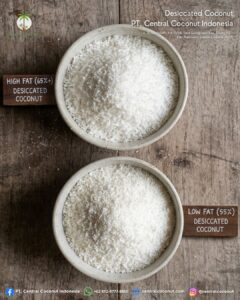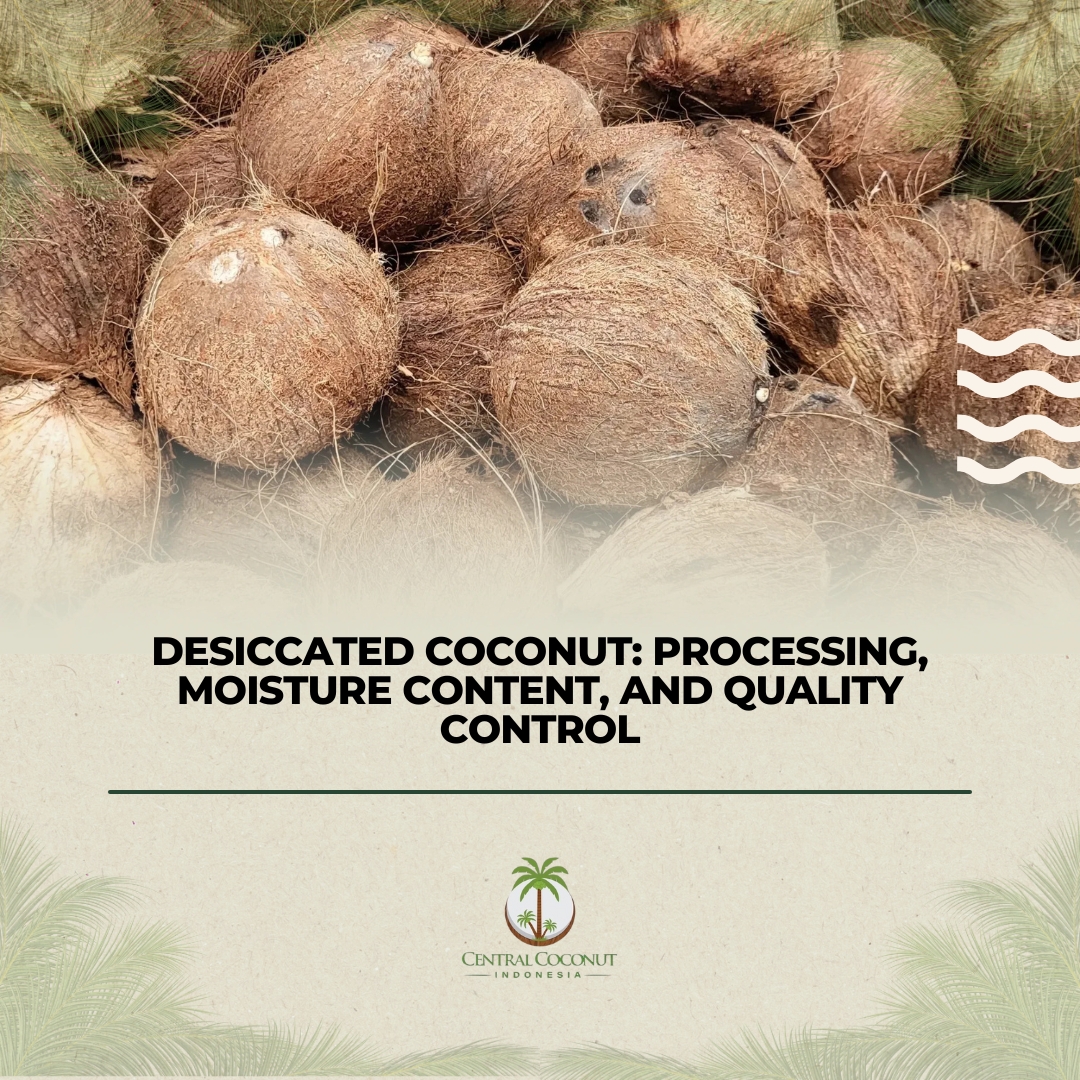
Desiccated Coconut is a versatile product derived from the white flesh of mature and fresh coconuts, meticulously processed to remove the testa (skin). This product is widely used in culinary applications, confectionery, and various food industries due to its distinct flavor and texture. The production of desiccated coconut involves a series of critical stages, ensuring a high-quality end product. These stages include:
- Husk Removal: The initial step involves removing the fibrous husk surrounding the coconut shell.
- Coconut Shell Removal: The hard shell is then carefully separated from the coconut flesh.
- Testa Removal: The thin brown testa layer is peeled off to obtain pure white coconut flesh.
- Washing: The coconut flesh is thoroughly washed to remove any impurities.
- Blanching (Optional): This step, often used to inactivate enzymes and improve shelf life, involves briefly heating the coconut flesh.
- Grating: The coconut flesh is grated into fine particles.
- Drying: The grated coconut is dried to reduce its moisture content, a crucial step for preservation.
- Sifting: The dried coconut is sifted to achieve a uniform particle size.
- Packaging: The final product is packaged in moisture-resistant materials to maintain its quality and freshness.
The Significance of Moisture Content
Moisture content is a critical parameter in determining the quality and shelf life of desiccated coconut. It represents the amount of water present in the product, which can significantly impact its stability. Excessive moisture can promote microbiological, chemical, and enzymatic degradation, leading to spoilage and rancidity. Water activity, a measure of the available water in a product, plays a pivotal role in these processes. Therefore, accurate measurement of moisture content is essential for quality control and ensuring product safety.
According to the Indonesian National Standard (SNI) 01-375-2000, the maximum allowable moisture content for desiccated coconut is 3%. Maintaining moisture content within this range is crucial for preventing microbial growth and preserving the product’s quality. During the drying process, water evaporates from the coconut, resulting in a reduction in moisture content. Achieving an optimal moisture level, ideally around 1.8%, ensures a desirable texture and prolonged shelf life. While a moisture content of up to 3.50% may be tolerated, exceeding the SNI standard can compromise product quality. The rate of moisture loss is directly related to the duration and intensity of heat exposure during drying.
Analytical Methodology: Determination of Moisture Content (AOAC, 1995)
The determination of moisture content in desiccated coconut is performed using the Association of Official Analytical Chemists (AOAC) method, a widely accepted standard. The process involves:
- Preparation of the Crucible: A clean and empty porcelain crucible with its lid is dried in a preheated oven at 100-105°C for 1 hour. This step ensures the removal of any residual moisture from the crucible.
- Cooling and Weighing: The crucible is then transferred to a desiccator to cool for 30 minutes. Once cooled, it is weighed to obtain a constant weight.
- Sample Addition: Approximately 2-3 grams of the desiccated coconut sample are accurately weighed and added to the pre-weighed crucible.
- Drying Process: The crucible containing the sample is placed back into the oven at 100-105°C for 3 hours. This drying process removes the moisture from the sample.
- Constant Weight Determination: The drying and weighing process is repeated until a constant weight is achieved, indicating complete moisture removal.
- Final Cooling and Weighing: The crucible is cooled in a desiccator for 30 minutes and then weighed. The difference between the initial and final weights represents the moisture content of the sample.
This analytical method provides accurate and reliable data for assessing the moisture content of desiccated coconut, ensuring compliance with quality standards and maintaining product integrity.