Desiccated coconut, a culinary commodity with significant popularity across diverse global gastronomic traditions, contributes a distinctive texture and unique aroma to both savory and sweet dishes, effectively enriching their sensory qualities. The production process involves dehydrating mature coconut meat to preserve its rich tropical essence and characteristics. Its application in recipes is broad, ranging from coconut-based desserts like coconut cakes to savory preparations such as curries and salads.
A fundamental factor that makes desiccated coconut a highly valued ingredient in contemporary culinary practices is its seamless integration into various dish formulations, imparting a subtle yet significant tropical flavor to each creation. Furthermore, it exhibits good compatibility with other ingredients, including coconut water, widely recognized for its hydrating attributes and abundant nutritional content.
The Importance of Proper Storage and Usage:
Optimizing the quality of desiccated coconut requires proper storage and utilization. As with most dried products, it is susceptible to losing freshness and flavor due to exposure to air or moisture. Recommended storage involves airtight containers in a cool, dry environment to maintain its quality. For extended storage, refrigeration or freezing can be applied, especially for bulk purchases or low usage frequency. These methods effectively preserve the natural oil content and characteristic aroma of the coconut, ensuring its flavor quality is maintained until needed.
Through the proper storage and utilization of desiccated coconut, you not only preserve its flavor quality but also optimize its rich nutritional profile, making it a more valuable addition to a healthy diet.
Tip 1: Choose the Right Storage Containers for Desiccated Coconut
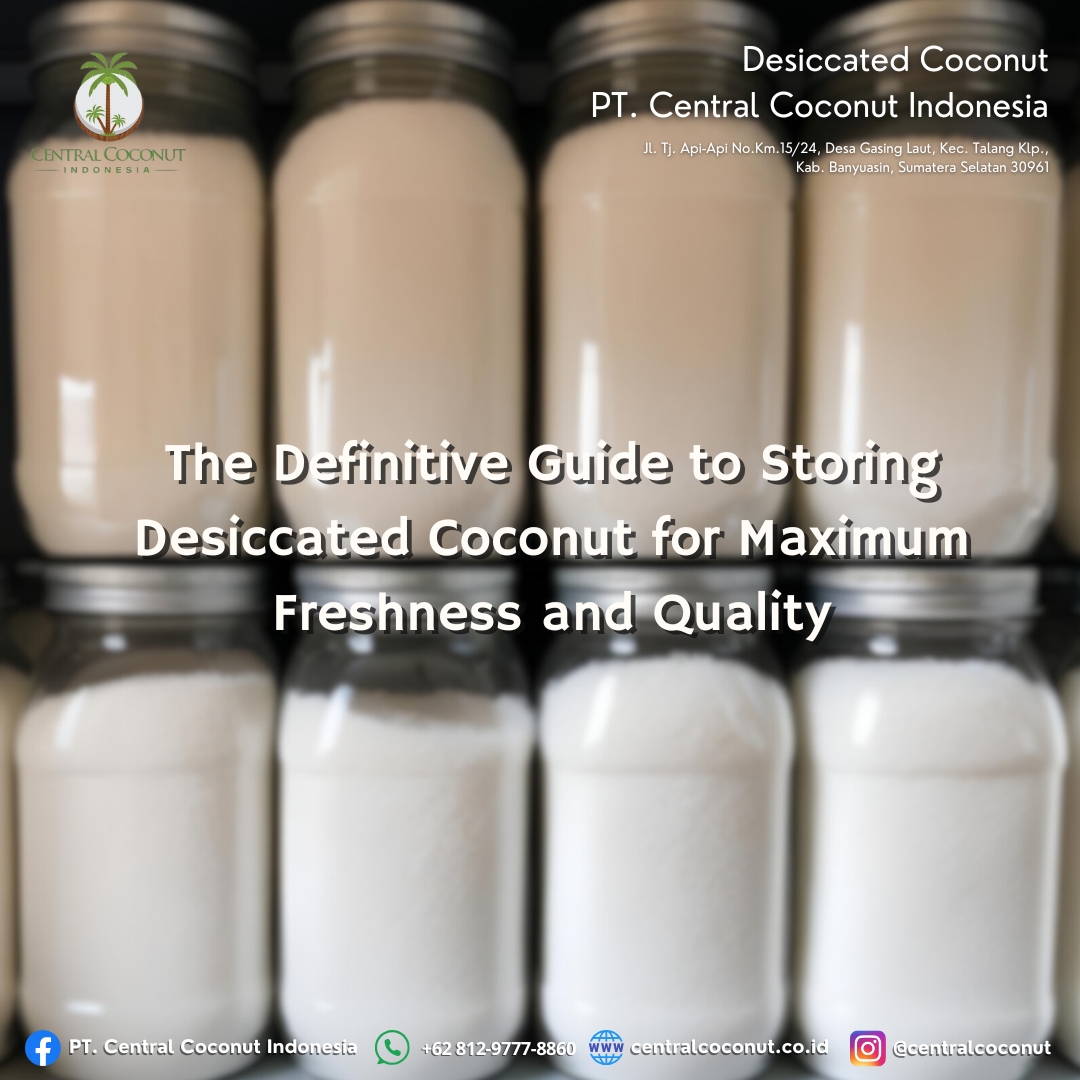
To maintain the quality of desiccated coconut, it is important to choose airtight containers that protect it from moisture, air, and light, which can damage the product. Suitable storage containers for desiccated coconut include:
-
- Glass Jars with Airtight Lids. These are a good choice for maintaining the freshness of desiccated coconut. The inert nature of glass minimizes the risk of chemical reactions that could potentially affect its flavor quality. Additionally, glass jars effectively block moisture, which helps preserve the health benefits of desiccated coconut, including the properties of coconut water.
- BPA-Free Plastic Containers. If choosing plastic containers, opt for high-quality, BPA-free options that are airtight. Ensure these containers are also opaque, as light can affect the quality of the coconut. BPA-free plastic containers also help prevent the loss of antioxidant nutrients, which are important components of coconut water.
- Vacuum-Sealed Packaging. This method is suitable for long-term storage, protecting against both air and moisture. It is particularly helpful when purchasing desiccated coconut in large quantities and wanting to keep it fresh for an extended period. The reduction of air in the packaging also prevents fat oxidation, which is crucial for maintaining the nutritional value of the coconut.
Tip 2: Store Desiccated Coconut in a Cool, Dry Place to Maximize Freshness
Desiccated coconut should be stored at temperatures between 50°F (10°C) and 70°F (21°C), away from sources of heat and moisture. Excessive heat can cause the desiccated coconut to lose its freshness, leading to rancidity due to its fat content. Avoiding moisture is paramount in storing desiccated coconut, as it can lead to clumping or spoilage. Direct sunlight should also be avoided when storing desiccated coconut, as the UV rays can increase temperature and damage its components, causing oxidation. Consequently, desiccated coconut can become rancid more quickly and become unsuitable for consumption.
-
- Cool and Dry. Choose a dry and cool place to prevent moisture from causing clumping or spoilage of the desiccated coconut.
- Avoid Direct Heat. Desiccated coconut should not be exposed to direct sunlight or high temperatures to maintain its quality.
- Seal for Freshness. For extra protection, store desiccated coconut in airtight containers to preserve its quality over a longer period.
Tip 3: Desiccated Coconut Can Be Frozen for Long-Term Storage
One of the most effective ways to store desiccated coconut for an extended period is by freezing it. This method helps maintain its taste, texture, and quality, and can prevent it from becoming rancid.
-
- Use Airtight Containers or Freezer Bags. It is advisable to store desiccated coconut in airtight containers or bags specifically designed for freezing. This action is crucial in inhibiting degradation due to the freezing process and maintaining optimal moisture levels, thus preserving the overall quality of the coconut.
- Portion for Efficient Use. Before freezing, it is best to divide the desiccated coconut into smaller portions. This strategy facilitates thawing only the amount needed at a time, significantly contributing to the reduction of potential waste and ensuring the remaining coconut stays in optimal condition.
- Label with the Date. Each storage container or bag should be labeled with the freezing date. This information is essential for monitoring the storage duration of the desiccated coconut, thereby helping to maintain the best possible quality for as long as possible.
- Thaw Properly. When ready to use frozen desiccated coconut, transfer it from the freezer to the refrigerator for several hours or overnight to thaw. In situations requiring faster handling, an alternative thawing method involves placing the coconut on a baking sheet at room temperature for approximately 30 minutes. This method aims to ensure the coconut retains its texture and avoids becoming too soft or clumpy, similar to the practice of maintaining the freshness of coconut water through proper thawing.
- Avoid Refreezing. Once thawed, desiccated coconut should not be refrozen, given the potential negative impact on its texture. Remaining thawed coconut can be stored in the refrigerator for up to several weeks.
Ensuring the quality and extending the shelf life of desiccated coconut requires attention to proper storage and usage practices. Selecting appropriate containers, such as airtight glass jars, opaque BPA-free plastic containers, or vacuum-sealed packaging, is a crucial initial step in protecting the desiccated coconut from external factors that can degrade its quality. Storage in a cool and dry location, with an ideal temperature range between 10°C and 21°C, and avoiding direct exposure to heat sources and sunlight are also vital in maintaining freshness and preventing the development of rancidity due to fat oxidation.
For longer-term storage, freezing proves to be an effective method for preserving the taste, texture, and nutritional quality of desiccated coconut. Optimal freezing involves using airtight containers or freezer bags, portioning the product into smaller, more manageable amounts, labeling with the freezing date, and employing proper thawing methods. It is important to avoid refreezing after thawing to prevent undesirable textural changes.
By adopting these tips, consumers can significantly increase the storage duration of desiccated coconut while maintaining its flavor quality and nutritional content. Proper storage and usage practices not only minimize potential waste but also ensure that the health benefits contained within the coconut, including the hydrating and nutritional properties of coconut water, can be enjoyed optimally in various culinary applications.
by:
Briandy Effendi
Sales Executive
WhatsApp: +62 812-9777-8860 | E-Mail: sales@centralcoconut.co.id
Jl. Tj. Api-Api No.Km.15/24, Desa Gasing Laut, Kec. Talang Klp.,
Kab. Banyuasin, Sumatera Selatan 30961.